

Is It Time to Clean Your Lakeland Septic Filter?
Your septic system doesn't announce when it's struggling. It just slows down. Backs up. Starts smelling like something died under your yard. And by the time you notice, the filter's already clogged beyond what a quick rinse can fix. Most Lakeland homeowners don't even think about their septic filter until the plumber shows up and mentions it—or until wastewater starts pooling where it shouldn't.
So here's the reality. That filter isn't optional maintenance. It's the difference between a system that runs clean for years and one that fails early, floods your drain field, and costs you five figures to replace. If you're not checking it at least annually, you're gambling with your property—and your wallet.
What That Filter Actually Does
The effluent filter sits in the outlet section of your septic tank, and its entire purpose is to block solids from escaping into your drain field. Without it, sludge and debris would flow straight into the pipes underground, clogging them until the whole system stops absorbing wastewater. Once that happens, you're not just dealing with a backup—you're dealing with excavation, replacement, and a lawn that looks like a construction site.
Over time, the filter traps more and more material. That's good—it's doing its job. But when it fills up, it chokes off the flow. Wastewater can't exit the tank fast enough, pressure builds, and suddenly your toilets won't flush and your showers won't drain. That's not a mystery. That's a clogged filter.
Warning Signs You're Overdue
Think your filter's fine? Maybe. But if any of these sound familiar, you're already behind.
- Drains moving slower than they used to, especially after heavy use
- Toilets that take forever to flush or won't clear completely
- Gurgling noises coming from sinks or tubs when water's running elsewhere
- Sewage odor near your tank or somewhere in the yard
- Wet spots or standing water over the drain field when it hasn't rained
How Often Cleaning Actually Needs to Happen
Once a year is the baseline. But that's not universal. If you've got a big household, run the dishwasher and washing machine daily, or your system's older, you might need to clean it twice a year. Smaller homes with light water use might stretch it a bit longer—but not by much.
We've seen filters go two years without cleaning and still function. We've also seen them fail after eight months because the household was dumping grease, flushing wipes, or just using more water than the system was designed to handle. The safe move? Stick to annual cleanings and adjust based on what you find. If the filter's packed every time, shorten the interval. If it's barely dirty, you're probably okay stretching it—but don't push your luck.
DIY Cleaning or Bring In a Pro
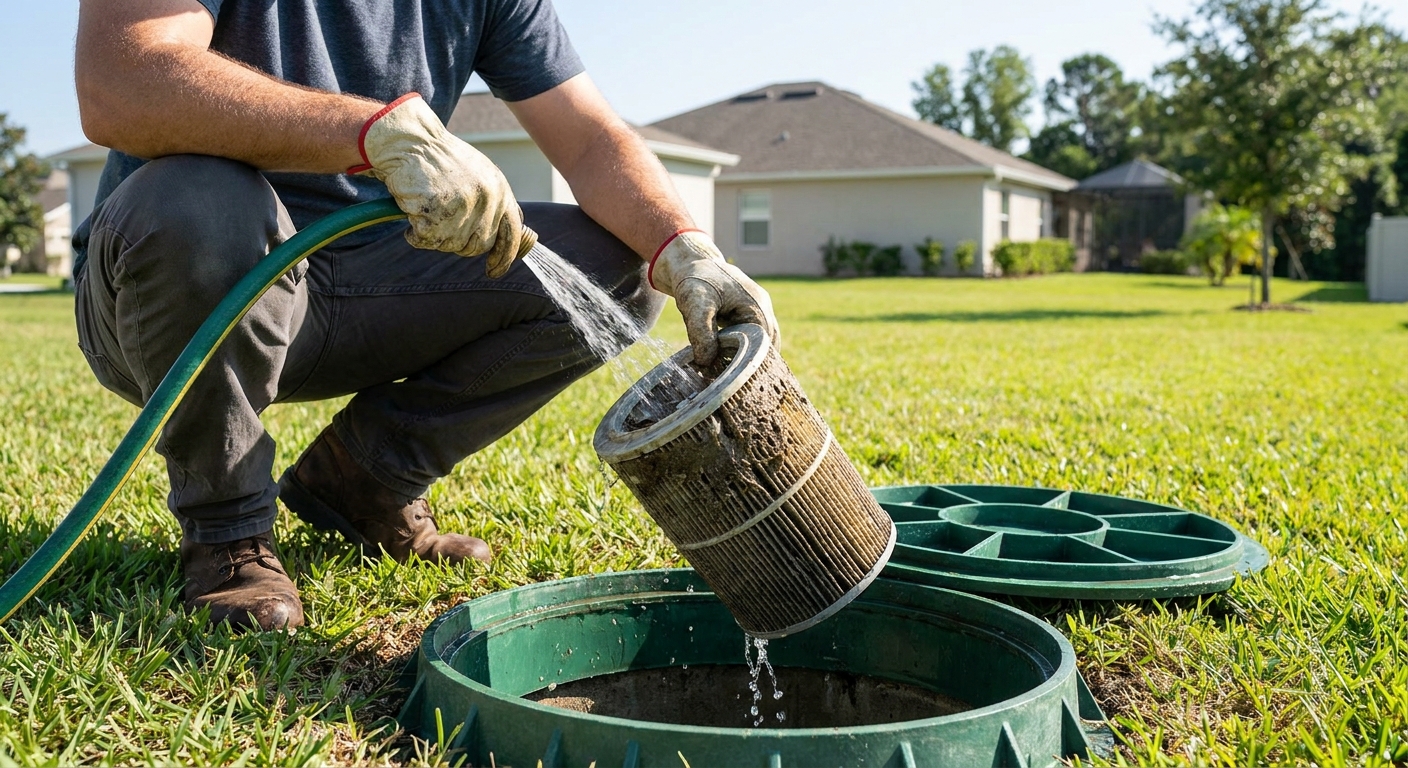
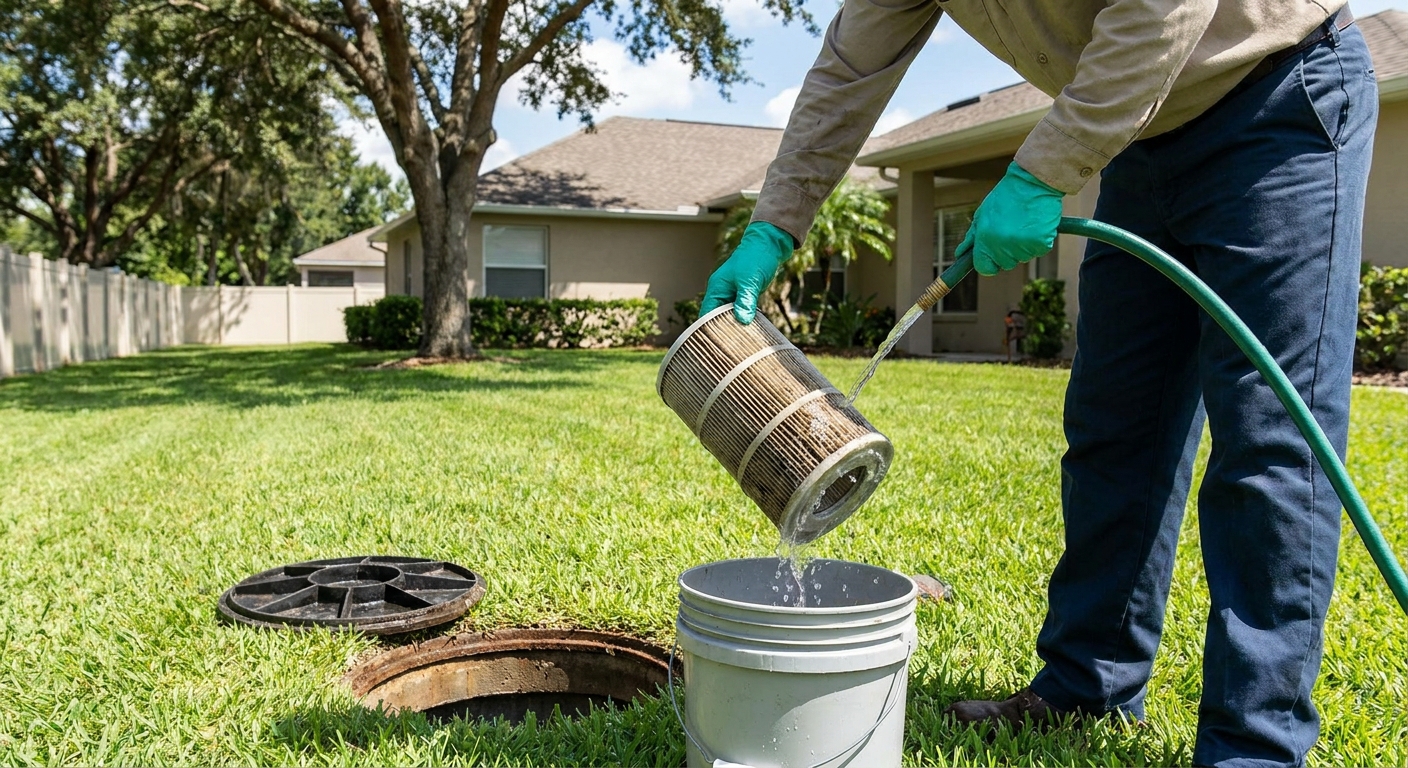
Cleaning the filter yourself is doable. It's not pleasant, but it's not complicated either. You'll need gloves, a hose, and a tolerance for the smell. Most filters just need to be pulled out, sprayed down until the debris's gone, and reinstalled. The whole process takes maybe twenty minutes if you know where everything is.
But here's where DIY gets tricky. You need to know what you're looking at. If the filter's cracked, warped, or falling apart, rinsing it won't help. If the tank's overfilled or the baffles are damaged, cleaning the filter is just a temporary patch. A professional can spot those issues before they become emergencies. They'll also dispose of the waste properly and check the rest of the system while they're there.
What Happens If You Skip It
Ignoring your filter doesn't just cause backups. It accelerates the failure of your entire drain field. Once solids get into those underground pipes, they don't break down—they accumulate. The soil stops absorbing water. The field floods. And suddenly you're looking at a replacement bill that starts at fifteen grand and climbs fast.
Even if it doesn't fail completely, a clogged filter puts stress on every part of your system. Pumps work harder. Pipes back up. Fixtures wear out faster. And all of it could've been avoided with a routine cleaning that costs less than a tank of gas.
Why Regular Maintenance Pays Off
Cleaning your septic filter isn't about avoiding one problem—it's about keeping the whole system functional for as long as possible. Here's what you get when you stay on top of it.
- No surprise backups or sewage surfacing in your yard
- Your drain field stays clear and functional for decades instead of years
- Wastewater exits the tank without restriction or pressure buildup
- Lower risk of expensive emergency repairs or full system replacement
- Better resale value if you ever sell the property
Common Mistakes That Make It Worse
Most septic problems aren't caused by bad luck—they're caused by bad habits. And a clogged filter is usually the first symptom of bigger issues.
- Flushing wipes, paper towels, or feminine hygiene products that don't break down
- Pouring grease or cooking oil down the drain, which solidifies and clogs the filter
- Using excessive amounts of bleach or chemical cleaners that kill beneficial bacteria
- Running the garbage disposal constantly, overloading the system with solids
- Ignoring maintenance until something breaks instead of staying ahead of it
When to Call Someone Who Knows What They're Doing
If you've never opened your septic tank, don't start experimenting during a backup. Call a professional. They'll clean the filter, inspect the tank, check the baffles, and tell you if anything else needs attention. It's not just about the filter—it's about catching problems before they escalate.
And if you're buying a home in Lakeland with a septic system, make sure the filter's been cleaned recently. Better yet, have it inspected before you close. A neglected filter is a red flag that the previous owner didn't maintain the system, and you don't want to inherit that bill.
What Clean Maintenance Looks Like
Keeping your septic system running isn't about waiting for warning signs. It's about building a routine that prevents them in the first place.
- Schedule filter cleaning annually or more often if needed
- Keep a maintenance log so you know when the last service happened
- Pump the tank every three to five years depending on usage
- Avoid flushing anything that isn't waste or toilet paper
- Watch what goes down the drains—grease and chemicals are your enemy
Don't Wait for the Backup to Decide
Your septic filter is small, cheap to maintain, and critical to your system's survival. Ignoring it doesn't save you time or money—it just guarantees you'll pay more later. Whether you clean it yourself or hire someone who knows the drill, make it part of your routine. Because the only thing worse than dealing with a clogged filter is dealing with a failed drain field and a yard full of excavators. For comprehensive septic tank service maintenance, including regular septic tank pumping and professional drainfield repair and installation, partnering with experienced residential and commercial septic tank services ensures your system stays functional for years to come.
Let’s Keep Your Septic System Trouble-Free
We know how important it is to keep your home running smoothly, and a clean septic filter is a big part of that. Don’t wait for a backup to remind you—let’s stay ahead of the mess together. If you’re ready for reliable, professional help, give us a call at 863-393-3127 or get a quote today and let’s make sure your system is protected for the long haul.
‹ Back
Recent Posts
-
Is It Time to Clean Your Lakeland Septic Filter?
November 20, 2026
-
What Happens If You Skip Septic Tank Maintenance in Lakeland?
November 6, 2026
-
Can a Power Outage Affect Your Lakeland Lift Station?
October 23, 2026
-

Should You Repair or Replace Your Lakeland Drain Field?
October 9, 2026
-
When Should You Schedule Septic Tank Pumping in Lakeland?
September 25, 2026